2026/11/10 16:22 WORLD
Women's clothing manufacturer customization services
Hangzhou Jindian Textile Co., Ltd. (Jindian Textile) is a fabric and women’s clothing manufacturer providing OEM and ODM services to fashion brands, traders, and cross-border sellers.
For a fashion brand, finding a manufacturer is about more than finding a production line. The right partner must understand fabrics, translate designs into wearable samples, coordinate materials, maintain quality, and respond when a style needs to be reordered.
That becomes more challenging when collections contain many styles but relatively small quantities. A factory built around large, uniform orders may not be the best fit for a brand testing a new market or developing a varied seasonal range.
Jindian Textile’s approach centers on two priorities: flexible production and fast-response reorders.
A Fabric Background, with Women’s Garment Manufacturing Capability
Based in Hangzhou, within China’s Yangtze River Delta apparel industry cluster, Jindian Textile has evolved from a fabric manufacturer into a company offering fabric development and garment production.

The company has more than 30 years of experience in jacquard fabric development and weaving, alongside over 15 years of women’s garment manufacturing for mid- to high-end brands.
This fabric background matters when turning a design into a finished garment. Fabric choice affects drape, structure, appearance, and how a piece can be constructed. Working with a manufacturer that understands both materials and garment production can help brands coordinate these decisions from an earlier stage.
Jindian supports a range of women’s clothing categories, including dresses, blouses, trousers, skirts, outerwear, jumpsuits, and loungewear. Customers can provide a design drawing, sample garment, or technical requirements as the starting point for customization.
Factory Capacity: From Sampling to Production
Jindian Textile operates production bases in Hangzhou and Anhui, with approximately 100 employees. Its factory facilities cover 1,350 square meters in Hangzhou and 2,000 square meters in Anhui.
Its stated production and development capabilities include:
Annual garment capacity: approximately 200,000 pieces
Monthly garment capacity: approximately 20,000 pieces
Garment sampling capacity: up to 150 styles per month
Fabric development: more than 1,000 designs developed annually
The equipment list includes 70 single-needle sewing machines, four double-needle machines, 10 overlock machines, four template sewing machines, one laser cutting machine, and one automatic cutting line. The facilities also have two buttonhole machines and two button-attaching machines.
These figures describe overall capacity rather than a guaranteed allocation for an individual order. Available capacity, sampling time, and delivery schedules depend on the style, materials, workmanship, order quantity, and production schedule.
Jindian offers quality checks throughout its production service, followed by quality tracking and handling of reported issues after delivery. Inspection requirements and acceptance standards should be agreed upon when an order is placed.
Comparing Manufacturing Approaches: What Fits Your Brand?
Different manufacturing models serve different needs. For buyers comparing options, the important question is not simply which factory is largest, but which approach fits the collection and order plan.
| Buying consideration | Jindian Textile’s approach | What brands should assess |
|---|---|---|
| Small trial orders | Supports small-batch orders | Confirm the minimum quantity for each style and material |
| Multiple styles | Supports parallel sampling and production across styles | Discuss the number of styles, complexity, and schedule |
| Reorders | Offers fast-response repeat production | Confirm fabric availability, capacity, and the reorder timeline |
| Material sourcing | Offers material purchasing or processing with customer-supplied materials | Decide who will source and approve each material |
| Service scope | Covers fabric development through garment delivery | Define responsibilities, quality requirements, and handover points |
| Sales channels | Does not operate its own retail brand channels | Consider whether the manufacturer could compete with your own sales channels |
There is no single production model that works for every buyer. A brand with a large, stable order may prioritize long production runs. A designer label testing several styles may place greater value on flexible quantities and close sampling communication.
Flexible Production for Small Batches and Multiple Styles
One of the biggest obstacles for emerging brands is the gap between creative ambition and minimum order requirements. A designer may have several promising styles but may not want to commit to a large quantity of each before seeing customer demand.
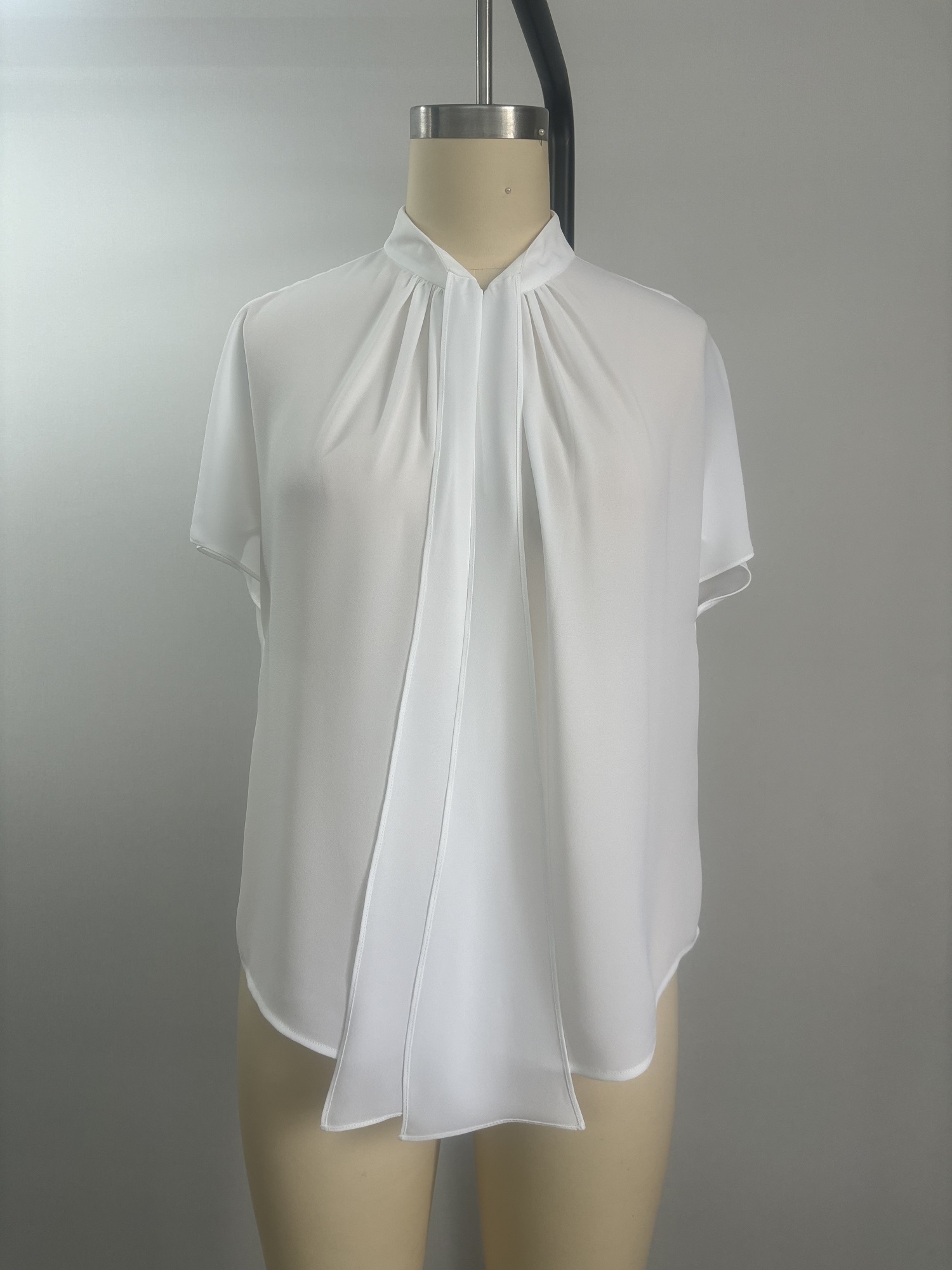
Jindian supports small-batch orders and production planning based on individual orders. This can make it suitable for independent designer brands, cross-border sellers, and established businesses testing new products.
For example, a buyer could discuss sampling several blouse and dress designs before deciding which styles to move into production. Small-batch support does not mean every style has the same minimum quantity: fabric, construction, and supplier requirements can affect the final terms.
Sizes can follow the customer’s own measurement chart or be discussed using sizes 6 through 16. Pricing is based on the style and its workmanship requirements.
Fast-Response Reorders: Preparing for the Next Sales Window
A successful launch brings a welcome challenge: keeping a popular style in stock.
Jindian supports repeat orders and fast-response production for customers who need to replenish selling styles. For brands with seasonal collections or direct-to-consumer channels, discussing reorder plans early can help both parties prepare for the possibility of additional production.
A reorder timeline still needs to be confirmed for each order. Material availability, production capacity, order quantity, and any changes to the original style can all affect timing. Buyers should share expected quantities and target delivery dates as soon as possible.
One Partner Across the Production Process
Coordinating separate suppliers for fabric, samples, sewing, and finishing can add communication and management work. Jindian offers an integrated OEM/ODM service that can include:
Fabric development and selection
Pattern making and sample development
Material purchasing or processing with customer-supplied materials
Cutting and sewing
Pressing and packing
Quality inspection and delivery
Customers can choose the cooperation model that fits their needs. A brand with its own fabric supplier may provide materials for processing, while another may ask Jindian to assist with sourcing.
Behind this workflow are fabric development, pattern-making, and production teams whose practical experience helps connect design requirements with manufacturing. For buyers, clear technical documents and sample feedback remain essential to an effective working relationship.
Experience Supporting Overseas Brands
Jindian says it has served hundreds of customers and has worked with brands including URBAN OUTFITTERS, ANTHROPOLOGIE, CUE, VERONIKA MAINE, SHEIKE, and MACY’S.
Its cooperation with Australian brands CUE and VERONIKA MAINE has lasted more than ten years, covering ongoing fabric development, sample development, and production supply.
For independent designer brand Zandra Stone, Jindian provided fabric options, developed samples, produced garments, and arranged delivery to the designer’s Los Angeles warehouse. The company says the cooperation has continued.
Jindian also lists BSCI social responsibility auditing, OEKO-TEX Standard 100, and GRS among its credentials. Buyers who require certification for a particular product or order should request current documentation and confirm the applicable scope.
A Manufacturing Partner, Not a Retail Competitor
Brands invest in their designs, positioning, and customer relationships. An important distinction is that Jindian does not operate its own retail brand channels and therefore does not compete with customers through those channels.
For buyers seeking a manufacturer that can support fabric development, small-batch production, and repeat orders, that separation allows each party to focus on its role: the brand builds its market, while the manufacturer supports product development and production.
Discuss Your Next Women’s Clothing Collection
Whether you have a design drawing, a reference sample, or an established style ready for a reorder, Jindian Textile welcomes inquiries from brands, traders, and cross-border sellers.
To receive a more useful assessment, share your product category, designs or samples, estimated quantities, material requirements, and target delivery date. Sampling and production timelines can then be discussed according to your order.
Contact: Eric Zhou
Email: ERIC@HZJINDIAN.COM
Explore further
| Which dress manufacturer shou | China OEM clothing manufactur |
| Top 10 Chinese Lubricant OEM | "Threads of Heritage: The E |
| Nanjing Sets Up First Women's |